Many homeowners love DIY projects. Painting a room? Sure. Building a small shelf? Go for it. However, some things should never be DIY-ed. A very strong example of this is changing an electrical panel. Its story is very different. Your electrical panel controls the power in your entire home. Touching it without the right training can be extremely dangerous. We trust you when you say you are confident with the tools. But this is one job where “do it yourself” can cause more harm than good. Let’s talk about DIY panel changing risks and why hiring Madison Electric is always the safer choice.
Why DIY Panel Changing Risks Are Genuinely Serious
Many people underestimate DIY panel changing risks because they think, “How hard can it be?” After all, it is just swapping old parts with new ones, right? Sorry to be the bearer of bad news, but no, that’s how it works! An electrical panel is not like a regular household project. It is full of wires, live electricity, and components that can cause shocks or even explosions. Our concern is that homeowners don’t see the danger until something goes wrong. The risks are hidden inside the panel, and one wrong move can lead to expensive damage or worse, injury.
What Happens Inside an Electrical Panel?
It will be helpful to know what an electrical panel does before listing the risks.
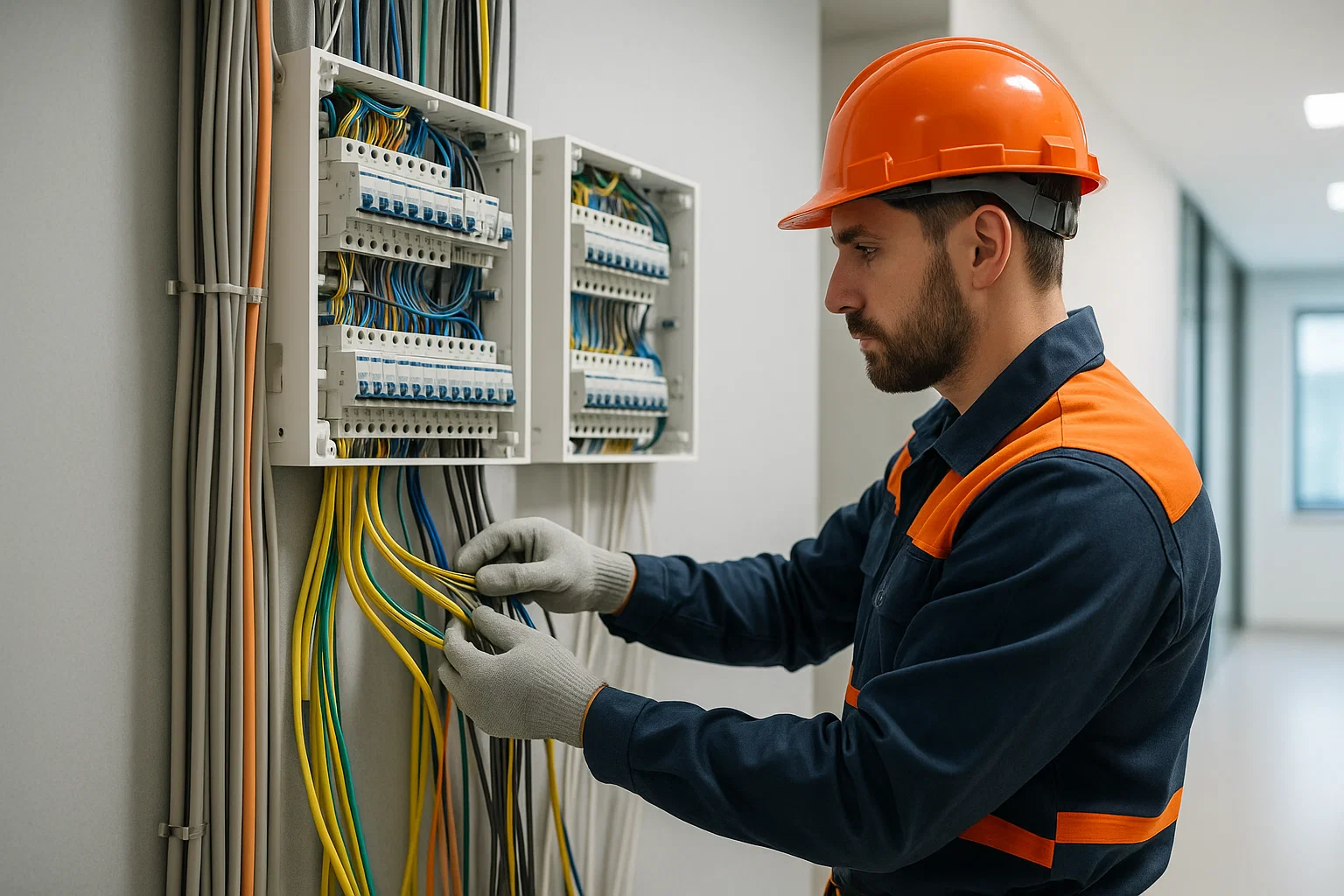
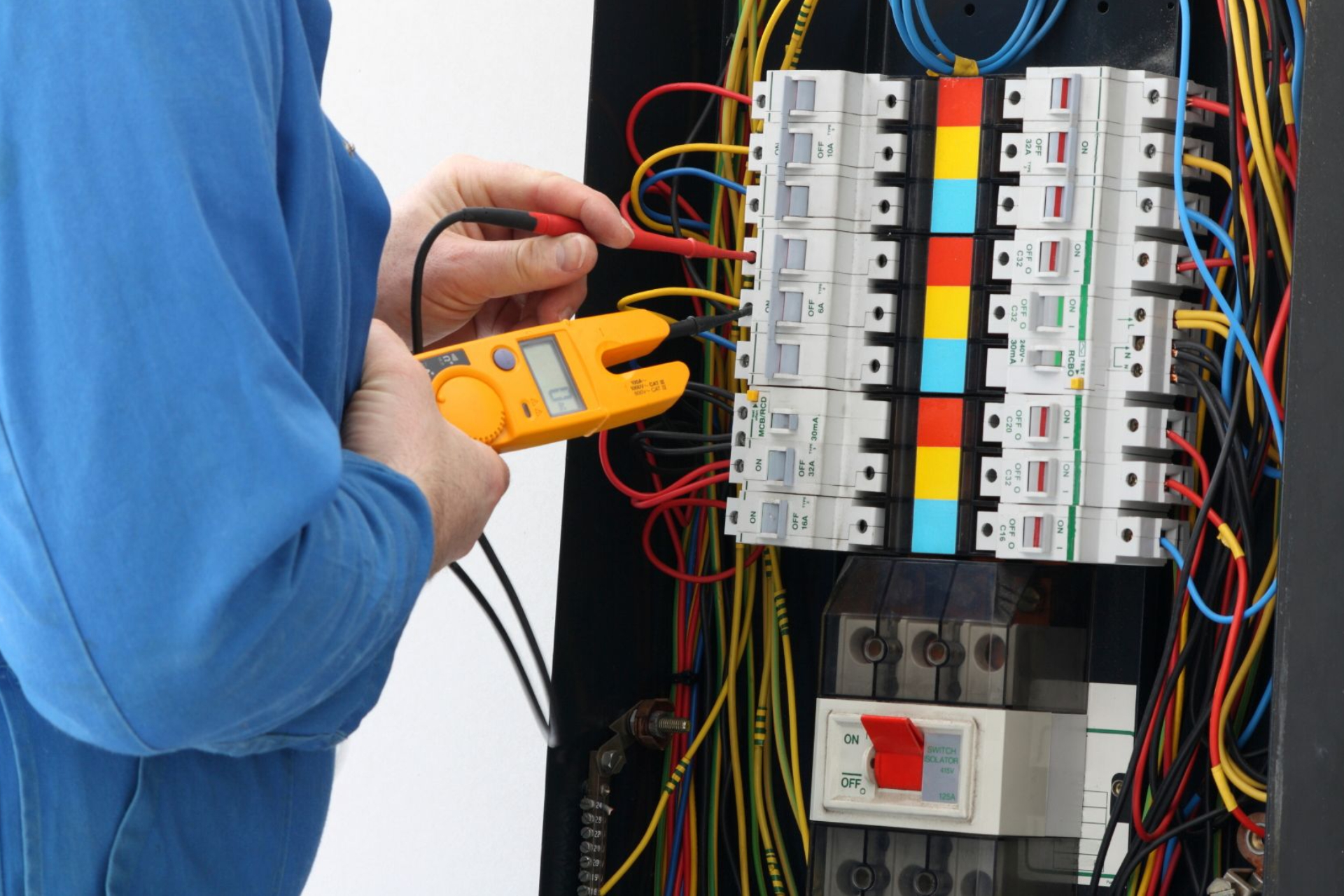
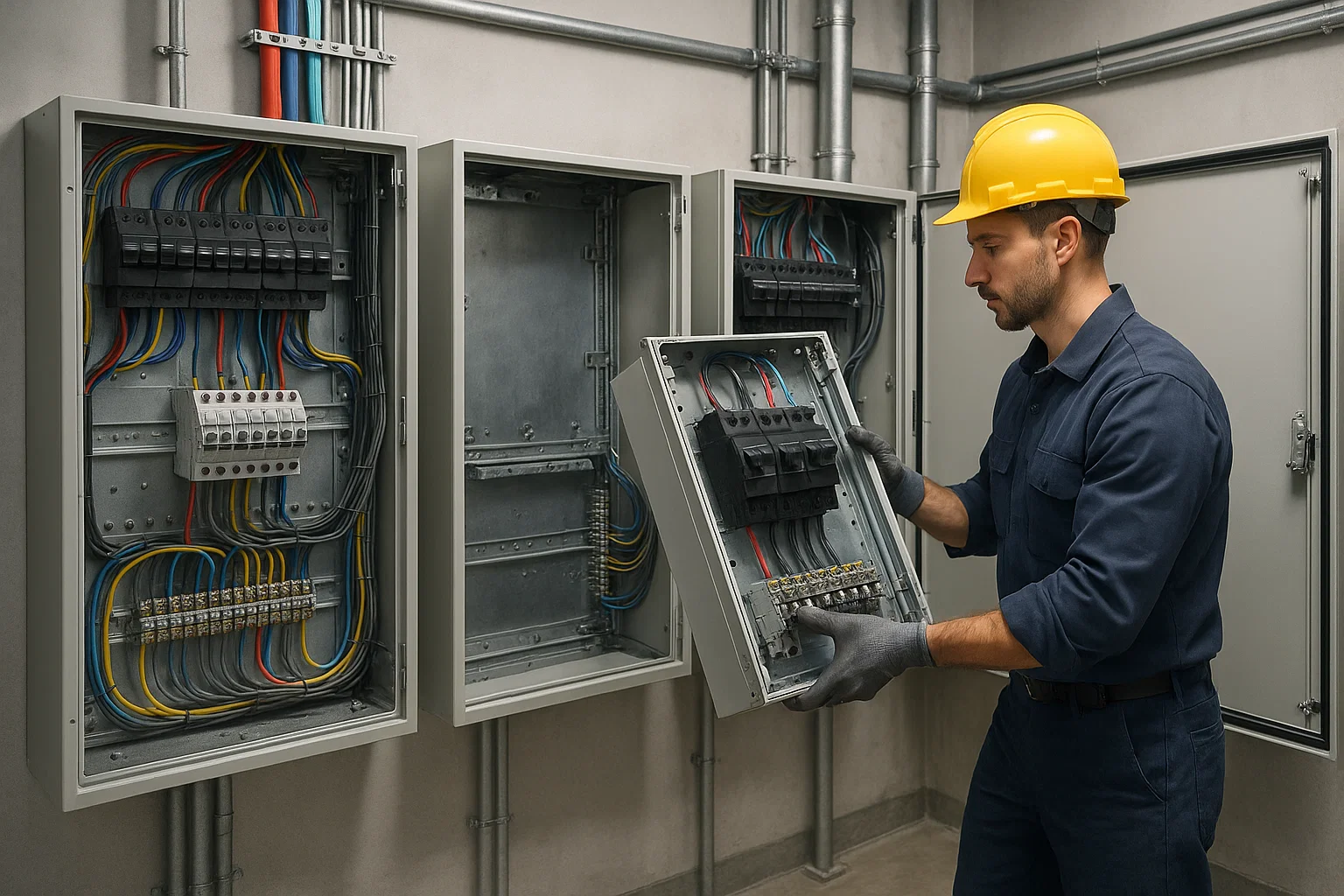
Your panel is like the “brain” of your home’s electrical system. Every light, outlet, appliance, and device in your home depends on it. Hundreds of wires connect inside it. Each one has a specific purpose. These wires carry powerful electricity. Even if you turn off the main breaker, some parts of the panel can still be live. That is what makes this job so dangerous for anyone who is not trained.
Keep reading to know the many risks of DIY-ing this risky job:
1. Electric Shock
One of the biggest DIY panel changing risks is electric shock. We are not talking about the tiny zap you get from static. We are talking about high-voltage electricity that can cause burns and worst-case scenario, death.
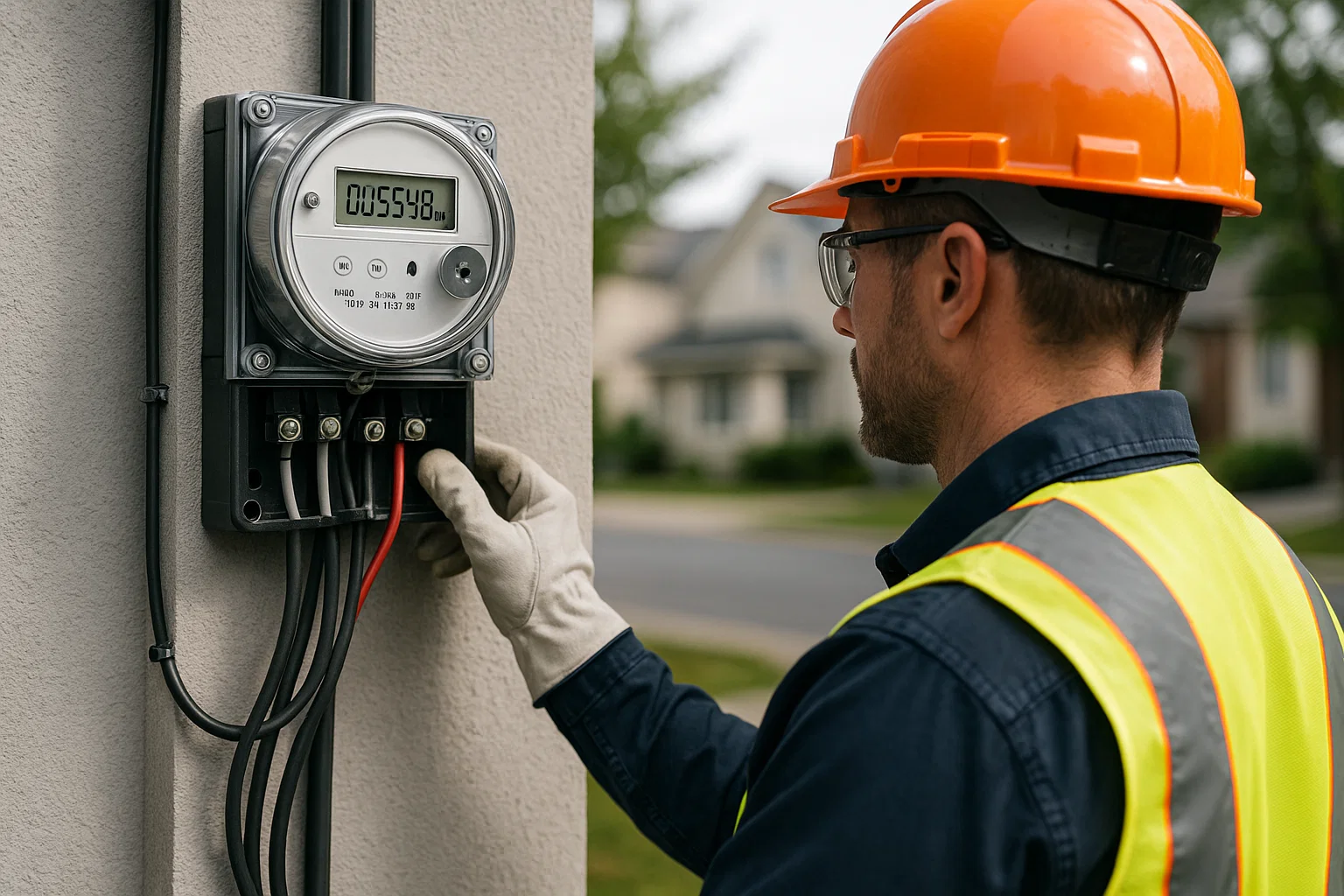
Many homeowners think flipping the main breaker turns off everything. They don’t know that in most panels, the wires feeding power from the utility company remain live. Touching them, even accidentally, can be life-threatening.
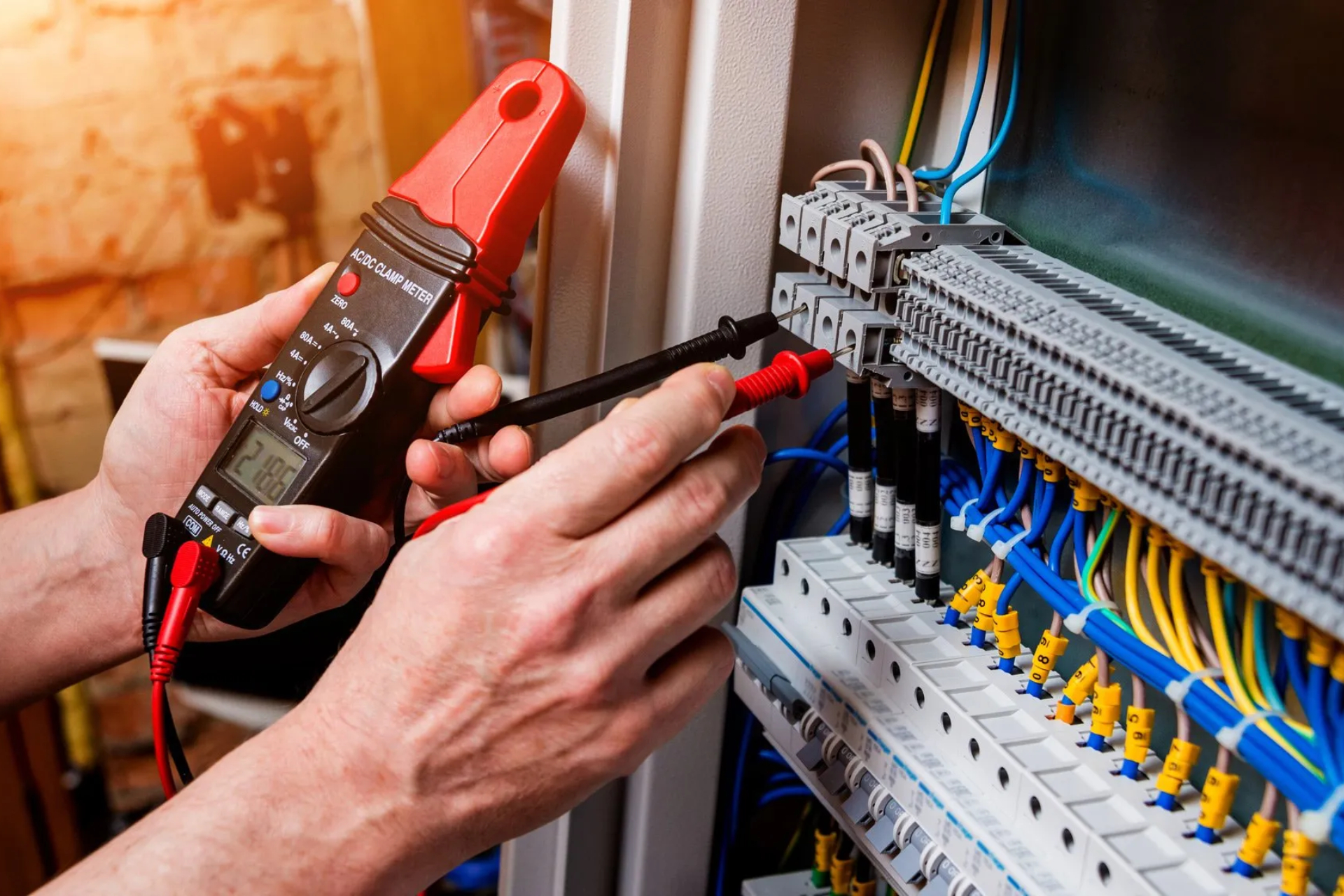
Professionals at Madison Electric use tools and wear protective gear. We make sure to follow strict safety steps. No joke, without this knowledge, the chance of shock is extremely high.
2. Incorrect Wiring
Congratulations! If you have managed to work inside the panel without getting shocked. Now, there is another danger: wiring mistakes.
Wires being placed incorrectly, tightened too loosely or connected to the wrong breaker can cause:
| Breakers that don’t trip | Damage to appliances | ||||
| Overheating | Electrical fires | Sparks | |||
These problems do not show up right away. A mistake made today could start a fire months later. There is a reason why safe wiring requires years of training, not a quick DIY video.
3. Code Violations and Failed Inspections
Another one of the major DIY panel changing risks is that your work may not meet electrical code requirements. Every city has strict rules about how panels must be installed. These rules protect homes from fires and electrical failures.
Let’s list some consequences if your panel doesn’t meet code:
- Your home can fail inspection
- You can get fined
- Your home insurance may not cover electrical damage
- You now have to pay a pro to redo the entire job
It’s not like you can just do a quick online search and master the codes. It is harder than that. In many areas, only licensed electricians are allowed to change a panel legally.
4. Expensive Damage to Your Home’s Electrical System
Changing a panel is not just replacing a metal box. It involves complex steps that only professionals can perform. Some of them include:
| Replacing old breakers → Reconnecting dozens of circuits → Handling neutral and ground wires → Ensuring equal power distribution |
One wrong move and it can cause flickering lights, tripping breakers, damaged outlets, or fried appliances. Fixing these issues later can cost far more than hiring a professional from the start.
5. Insurance and Warranty Problems
It’s time for a reality check. Let’s suppose an accident happens because of DIY electrical work. Your insurance company can easily refuse to pay for the damage.
Also, many new electrical panels come with warranties. However, those warranties are only valid if a licensed pro installs them. A DIY job voids the protection.
6. Safety Equipment and Skills
Do you have stuff like the following just lying under your bed?
| Insulated screwdrivers | Voltage testers |
| Safety gloves | Special grounding tools |
Probably not! These tools are not usually found in a regular toolbox. Even more importantly, electricians know how to work on live systems. They have got years of training. Without that training, the risk of injury is much higher.
Conclusion
Changing an electrical panel is not a simple DIY project. The DIY panel changing risks include electric shock, fires, wiring mistakes, code violations, failed inspections and even insurance problems. Your simple way to “save money” can actually end up costing far more financially and physically. Safety comes first when it comes to electricity. Calling Madison Electric is your safest option because our professionals have been doing it for years.
FAQ
Can a homeowner replace their own electrical panel?
A homeowner can replace their own electrical panel, but it is strongly discouraged and illegal without proper permits.
Is it illegal to do DIY electrical work?
Major work, like adding circuits, rewiring, or replacing the service panel, almost always requires a permit and must be done by a licensed electrician.
What is the 80% rule on breakers?
The 80% rule states that the continuous current draw on a circuit breaker should not exceed 80% of the breaker’s ampere rating.
What are the four types of electrical panels?
The four main types found in residential and smaller commercial settings are the main breaker panel, the main lug panel, the sub-panel, and the transfer switch panel.
What is the size of a standard electrical panel?
Most modern homes are equipped with a 200-amp service panel. Older homes may have 100-amp or 60-amp panels.